
Why the US Market Needs Multilingual Dubbing More Than Ever
The global media landscape has evolved quickly. Rapid streaming growth, social video, and cross-border distribution mean a single piece of content can be discovered by millions around the world almost immediately. For US creators and brands, this is a major opportunity — and a persistent challenge: language still blocks many potential viewers. Multilingual dubbing converts local videos into content that feels native to other languages and helps creators break language barriers to reach broader, international audiences.
This article explains why multilingual dubbing matters now, how modern industry approaches affect production choices, and practical steps creators can take to dub videos, translate videos, and expand their global reach.
Multilingual dubbing: what it is and why it matters
Multilingual dubbing replaces the original spoken audio in a video with translated speech in the viewer’s target language, producing a seamless viewing experience. Unlike translated subtitles or voice-over narration, dubbing supplies a fully localized audio track so viewers can focus on visuals without reading on-screen text.
Why this matters for the US market:
- Diverse US audiences: The United States is home to many language communities — Spanish, Chinese, Tagalog, Vietnamese, and more. Localized content improves accessibility and engagement for domestic non-English speakers.
- Global distribution: Streaming platforms often prefer ready-to-watch localized versions for each market. Dubbing helps content become more discoverable and retainable across regions.
- Viewer preference: Many viewers, particularly mobile-first and younger audiences, prefer to watch videos in their native language rather than rely on translated subtitles, which can improve watch time and viewer satisfaction.
Industry note: AI dubbing, AI voice, and available platforms
Across the industry, there are a variety of AI dubbing platforms, AI dubbing tools, and AI voice technologies designed to speed up some steps of the video dubbing process — from transcription to initial audio synthesis and alignment. These services can offer:
- Faster initial drafts for multiple languages.
- Lower marginal cost per language for very large catalogs.
- Options for experimenting with voice recreation or voice cloning in some contexts.
These automated options are part of the wider localization landscape and are often used as support tools. In most cases, human review is still essential to maintain nuance, idiomatic accuracy, and cultural relevance. At DUBnSUB, the emphasis remains on human-led dubbing delivered by experienced voice actors, linguists, and sound engineers to ensure consistent quality and cultural authenticity.
Our multilingual dubbing workflow at DUBnSUB
At DUBnSUB, dubbing a video into multiple languages follows a structured, human-led workflow designed to preserve the original intent, tone, and viewing experience—whether the project is a YouTube video, a training program, or content for international distribution.
The process generally includes:
- Source preparation: Collecting and reviewing video files (mp4, mov) along with the original audio (wav) to ensure technical readiness and clarity.
- Script creation: Transcribing the original audio and developing localized scripts for each target language, with attention to meaning, context, and natural phrasing.
- Voice casting: Selecting professional voice actors whose delivery aligns with the original tone and the speaker’s voice, ensuring consistency across languages.
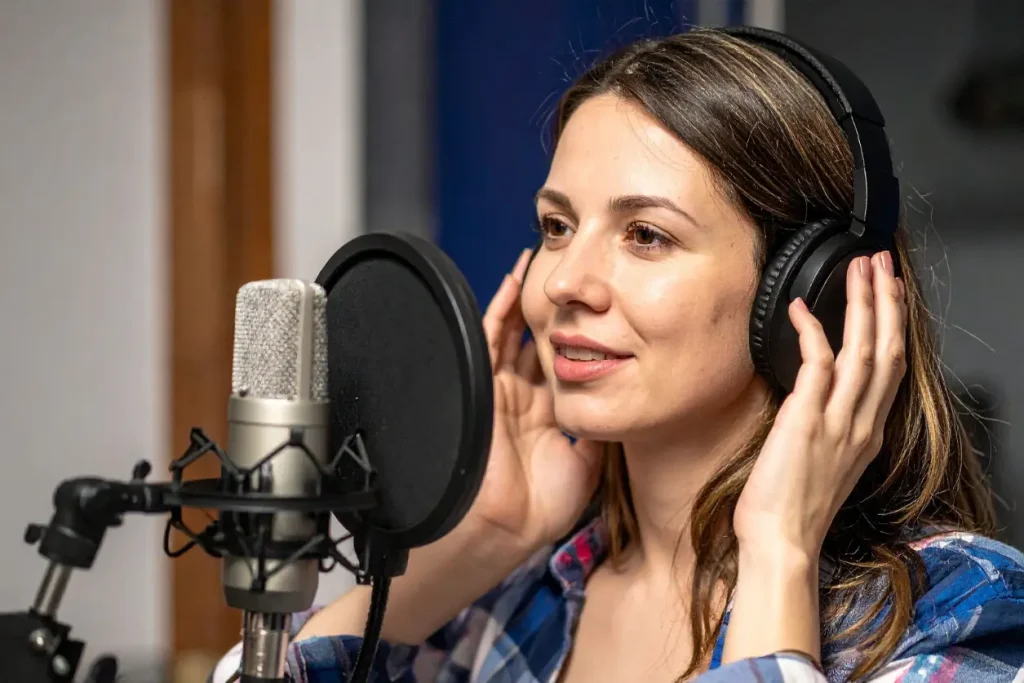
- Recording & direction: Recording performances in professional recording studios or controlled environments, guided by experienced directors to maintain pacing and intent.
- Lip sync alignment: Carefully aligning translated dialogue with lip movements and on-screen timing, making adjustments to achieve natural flow and synchronization.
- Audio mixing: Blending the dubbed audio track with background music and sound effects to create a balanced, immersive final mix.
- Quality control: Conducting native-language reviews to verify translation accuracy, tonal consistency, and cultural appropriateness before final approval.
- Final delivery: Exporting completed video files or standalone dubbed audio tracks, ready for distribution across platforms.
While certain industry tools may assist with preparatory tasks such as transcription, the essential elements of high-quality localization—voice performance, direction, lip-sync refinement, and final audio mix—are handled by DUBnSUB’s team of experienced professionals to ensure reliable, culturally accurate results.
Dub videos and translate videos: strategies for creators
For content creators—especially those on YouTube—the following approaches help scale multilingual reach efficiently:
- Pilot with top videos: Start by dubbing one or two of your best-performing YouTube videos into priority languages to measure listener response and retention.
- Different formats, different workflows: Short social clips and marketing content can be localized quickly; training videos and narrative episodes usually require higher fidelity and human-led performance.
- Protect the creator’s identity: If your voice is a key brand element, plan how to preserve the speaker’s tone and intent in translations while following consent and rights practices.
- Offer choices: Provide both the original audio and dubbed versions so viewers can select their preference.
- Localize on-screen text and captions in addition to the audio to avoid mixed-language confusion.
Lip sync and multiple speakers: technical and creative realities
Lip sync — matching translated audio to visible mouth movement — remains one of the more delicate parts of dubbing. For single-speaker formats (vlogs, tutorials), aligning timing is often straightforward; for scenes with several characters and rapid exchanges, human direction and professional voice actors yield the most convincing results.
Practical tips:
- Translate for cadence rather than literal word-for-word equivalence.
- Use shorter, flexible phrasing to match pacing.
- Add natural breaths and small vocal inflections to mirror the original performance.
- Assign distinct voices and clear mixing for projects with multiple speakers.
Dubbing for training videos and enterprise use
Organizations producing training videos benefit significantly from multilingual dubbing:
- Faster comprehension: Learners retain information better when instruction is provided in their native language.
- Safety and accuracy: For technical or safety-critical content, dubbing with native reviewers reduces the risk of misinterpretation.
- Scalability: A centralized localization process helps large organizations deploy consistent training across regions.
For enterprise projects, a measured workflow that includes subject-matter review and careful quality control is essential.
Choosing languages and prioritization
Select languages based on audience data and business goals. Many US creators start with Spanish and Portuguese, then expand into markets such as Japanese, Korean, and German depending on viewership and monetization potential. Analyze platform analytics to prioritize languages that will yield the best ROI.
Operational tips for publishing dubbed content
- Export high-quality audio files (wav) and keep versioned archives of the original audio and every dubbed audio track.
- Localize thumbnails, titles, and descriptions in YouTube Studio and other publishing platforms for better discoverability.
- Track performance by language to determine which languages are supported next and where to invest effort.
- Keep project files organized for future edits and re-dubs.
Cost considerations and ROI
Dubbing cost depends on video length, number of target languages, number of speakers, and the level of lip sync and sound design needed. For large catalogs, per-video costs generally fall with scale; for high-profile narrative projects, budget for studio time and professional actors. The return on investment comes from reaching new audiences, increasing watch time, and unlocking regional revenue opportunities.
Final thought
Rising global streaming consumption and the linguistic diversity of US audiences make multilingual dubbing a strategic priority for creators and brands aiming to grow globally. While industry tools such as AI dubbing platforms exist and can assist certain tasks, human-led dubbing—delivered by trained voice talent, directors, and localization teams—remains essential for preserving nuance, emotion, and cultural relevance. DUBnSUB focuses on human-led dubbing production to ensure quality, authenticity, and respect for the speaker’s voice and intent, helping creators reach new audiences with confidence.
FAQ
1. What is multilingual dubbing and why should US creators invest in it?
Multilingual dubbing replaces the original spoken track with localized speech in a viewer’s native language. For US creators, it helps reach domestic multilingual audiences and international viewers, improving watch time and engagement. DUBnSUB can advise on language prioritization and manage the human-led production process.
2. Do industry technologies like AI dubbing or AI voice make dubbing obsolete?
These technologies can speed certain tasks (like transcription or draft alignment) and are part of the broader localization ecosystem. They do not replace the need for professional voice actors, direction, and cultural review—elements that make high-quality dubbing effective for audiences. DUBnSUB emphasizes human-led dubbing to maintain performance and nuance.
3. How do I translate videos for YouTube and training videos?
Begin by analyzing your audience and choosing priority languages. Localize scripts, cast appropriate voices, record and fine-tune lip sync, and export final video files or audio tracks for upload. For training videos, include subject-matter reviewers to ensure accuracy. DUBnSUB offers end-to-end human-led dubbing services to support this process.
4. Can I preserve the speaker’s voice across languages?
There are methods to maintain a consistent vocal identity while translating content, but they require explicit consent and careful handling of rights. If preserving the speaker’s voice is important, consult with specialists who manage voice identity responsibly; DUBnSUB can advise on ethical and practical options.
5. Which languages should I prioritize first?
Choose languages based on platform analytics and target markets; Spanish and Portuguese often provide strong initial returns for US creators. Expand into other languages such as Japanese, Korean, or German based on viewer data and revenue potential. DUBnSUB can help analyze data and recommend a rollout plan.
6. Is dubbing cost-effective for large catalogs?
Yes—strategic planning, bulk production approaches, and prioritizing high-impact assets make dubbing cost-effective for large libraries. DUBnSUB provides scalable human-led solutions to manage larger volumes efficiently.
7. How long does it take to dub a typical video?
Turnaround depends on video length, complexity, number of speakers, and the detail required for lip sync and mixing. Short clips can be localized quickly; narrative or performance-driven content will take longer. DUBnSUB will outline realistic timelines based on project scope and quality requirements.