
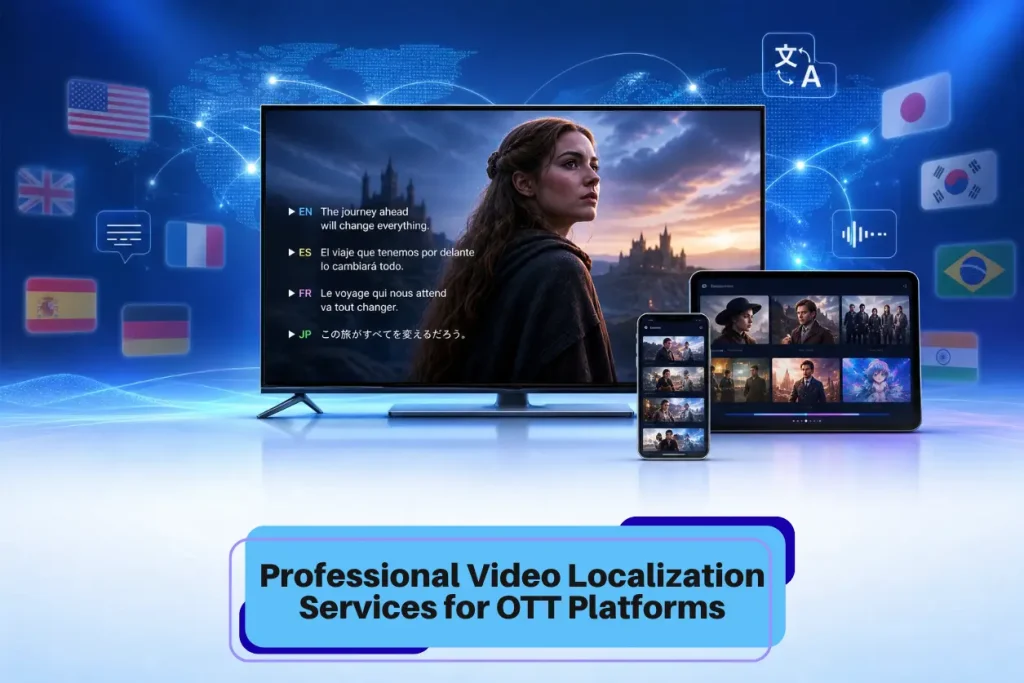
Video Localization for OTT Platforms: How to Add Multilingual Subtitles for Global Audiences
Video localization for OTT platforms is the process of adapting video content for viewers in different regions by adding accurate subtitles, translated subtitles, voice over, and other language-specific elements so the same original video can connect with multiple audiences worldwide. In practical terms, it helps streaming brands, media teams, and content owners turn one language source video into a multilingual video experience that feels natural, culturally relevant, and ready for global audiences.
Why video localization matters for OTT platforms
OTT platforms live and grow on reach. When your video content is available only in one language, you are limiting its value to a single market. Video localization removes language barriers and helps your content connect with international audiences across different languages, countries, and viewing habits.
For streaming businesses, this is not only about accessibility. It is also about video marketing, subscriber growth, and stronger engagement. A movie or TV show with english subtitles may already perform better than an untranslated title, but a fully localized release with subtitle translation services can open the door to even larger audiences. The same is true for training videos, marketing videos, corporate communications, and branded visual content.
OTT viewers expect convenience. They want subtitles that are perfectly synced, easy to read, and accurate enough to preserve tone and meaning. That is why video localization, when done properly, becomes a business advantage rather than a post production afterthought.
Video translation process: from source video to subtitle files
A strong video translation process begins with the source video and ends with polished subtitle files that can be delivered in the target language. The workflow usually starts with professional transcription of the spoken content, followed by translation, timing, review, and formatting into the required srt file or txt file.
For OTT delivery, timing matters as much as language quality. If subtitles appear too early or too late, the viewer experience suffers. That is why correct timing, line length, reading speed, and on screen text placement all matter.
A typical video translation project may include:
- Reviewing the original audio and video files
- Creating a transcript or transcription services output
- Translating the script into multiple languages
- Editing subtitles for clarity and flow
- Exporting subtitle files in srt format
- Testing the subtitles on the original video or platform player
If you need to download subtitles or download youtube subtitles for reference, the final output still needs to be cleaned up and adapted for your own content. A downloaded srt file may help as a starting point, but it should never replace a proper localization workflow.
Accurate subtitles make or break the viewer experience
Accurate subtitles do more than translate words. They preserve intent, cultural nuance, tone, and context. That matters especially when you are working with foreign language content, speaker-heavy scenes, emotional dialogue, or fast-moving educational material.
Poor subtitles can confuse viewers, damage credibility, and reduce completion rates. Accurate subtitles, on the other hand, improve comprehension and help your content travel better across markets. This is especially important for:
- movie subtitles and tv shows
- training videos
- product demos
- marketing videos
- corporate communications
- multilingual videos for international campaigns
If a subtitle translation service misses the meaning of a phrase, the result can feel awkward or flat. Native speakers and professional translation teams help avoid that problem by adapting the message, not just replacing the words.
Subtitle files, srt file, and how to add subtitles correctly
Most OTT platforms rely on subtitle files in standard formats, especially the srt file. This makes it easier to add subtitles, manage subtitle language options, and offer subtitles in one or more target language versions.
Here is the simple approach many teams follow:
- Start with the original video and audio files.
- Create a transcript of the spoken content.
- Translate the transcript into the desired subtitle language.
- Edit subtitles for timing, readability, and cultural relevance.
- Export the file in srt format.
- Test the subtitle files on the platform before publishing.
Some teams also use vlc media player to preview timing or check how a subtitle download looks on the source video. That can be useful during post production, but it should be part of a quality-control process, not the full workflow.
If your project includes voice over services, the subtitle plan should still align with the spoken content. In many cases, OTT platforms use both voice over and multilingual subtitles to serve different user preferences.
Free subtitles vs professional video translation services
It is easy to search for free subtitles or explore subtitle websites, subtitle sites, or tools like subtitle seeker and open subtitles when you need a quick reference. People also search for phrases like yify subtitles, latest subtitles, or find subtitles for a movie or tv show. Those sources may help viewers in casual settings, but they are rarely the best option for commercial OTT delivery.
Why? Because OTT content needs accuracy, consistency, rights-safe handling, and platform-ready formatting. Free subtitles may be incomplete, mistranslated, or not timed properly. They also may not reflect your brand voice or your intended audience.
Professional video translation services are a better fit when the goal is quality and scale. They help ensure that:
- subtitles are consistent across episodes or seasons
- the wording fits the target audience
- the translation feels natural in the target language
- the final subtitle files are ready for post production and delivery
- the translated video reflects your brand standard
For OTT platforms, that difference can affect retention, accessibility, and viewer trust.
Subtitle translation services for multilingual audiences
Subtitle translation services are especially useful when one title must perform in multiple regions at once. A single release may need english subtitles, plus versions in Spanish, French, Arabic, German, Japanese, or any other market-specific subtitle language.
That is where localization services become important. The goal is not simply to translate the spoken content. It is to make the video feel native to the viewer. This includes adapting references, correcting awkward phrasing, and aligning the subtitles with cultural expectations.
In many cases, OTT teams also work with professional video translation services for the broader workflow, especially when the project includes:
- multilingual subtitles for a global release
- corporate communications distributed internally and externally
- video content for product launches
- training videos for distributed teams
- marketing content for different regions
That is how a translated video becomes a scalable asset instead of a one-time export.
Post production is where quality gets finalized
Even when the translation is strong, post production is where the final polish happens. This is the stage where subtitle files are checked for line breaks, sync, punctuation, speaker labels, and readability. It is also where closed captions may be added if accessibility is a requirement.
Good post production protects the viewer experience. It ensures that subtitles do not overlap on screen, that the meaning is preserved, and that every version is ready for the platform’s delivery specs.
For OTT platforms, this final step is critical because one small subtitle error can be visible to thousands or millions of users. Careful post production keeps the content professional and consistent.
How DUBnSUB helps OTT platforms go global
DUBnSUB supports OTT platforms, media teams, and content owners with subtitle translation services, video translation, voice over, transcription services, and localization services designed for multilingual delivery. Whether you need english subtitles, translated subtitles, or subtitle files ready for a global release, the goal is the same: make your content easier to understand in every market.
For OTT teams, that means a smoother video translation process, better cultural relevance, and subtitles that are prepared for real-world use. It also means support for corporate communications, marketing videos, training videos, and other video content that needs to travel across borders without losing impact.
Frequently Asked Questions (FAQs)
1. What is video localization for OTT platforms?
Video localization for OTT platforms means adapting video content for viewers in different regions through subtitles, voice over, and language-specific adjustments. DUBnSUB helps OTT teams localize content so it feels natural, accurate, and ready for global audiences.
2. Do OTT platforms really need multilingual subtitles?
Yes. Multilingual subtitles help viewers understand the content in their preferred language and improve reach across international audiences. DUBnSUB provides subtitle translation services that make multilingual delivery practical for OTT platforms.
3. What file format is usually used for subtitles?
The srt file is one of the most common formats for subtitles because it is simple, widely supported, and easy to manage. DUBnSUB delivers subtitle files in platform-friendly formats that fit OTT post production needs.
4. Are free subtitles good enough for streaming content?
Free subtitles can be useful for quick reference, but they are often incomplete, poorly timed, or not professionally reviewed. DUBnSUB offers professional video translation services and accurate subtitles that are better suited for branded and commercial OTT content.
5. Can subtitles and voice over be used together?
Yes. Many OTT projects use both subtitles and voice over services to serve different audience preferences and distribution needs. DUBnSUB can support both, depending on the content and target language requirements.
6. Why should I choose a professional subtitle translation service?
A professional service helps ensure correct timing, natural wording, and cultural relevance across multiple languages. DUBnSUB supports subtitle translation, video localization, and post production workflows so your content is ready for global audiences.